Guided assortment services

Lego Services for Smarter Play Programs

For retailers, learning teams, and family-focused campaigns, Lego turns an idea into a clear play plan: age fit, product mix, safety notes, demo moments, and launch-ready content. Our team keeps the process practical, visual, and easy to approve, so a construction set or RC bundle does not become a confusing wall of parts.

Start a Program
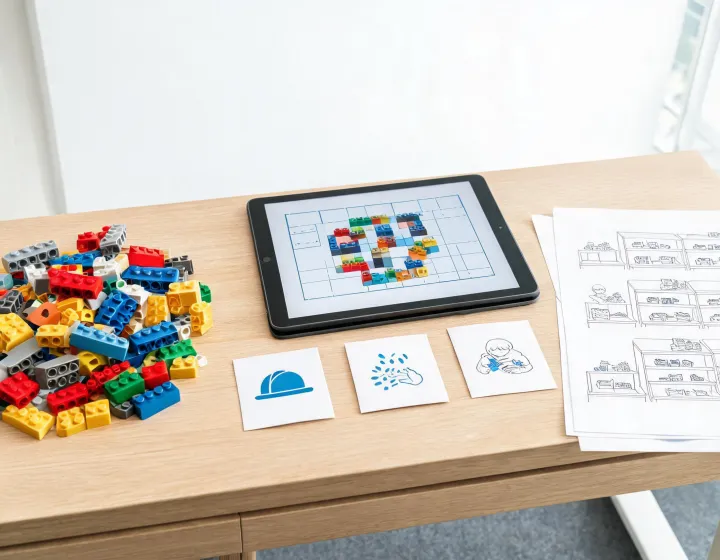
Illustrated planning desk for Lego toy assortment
Two-column guidance

Services stay close to the way children actually play.

Instead of presenting a generic catalog, every recommendation links a product type to a child behavior, buyer question, and merchandising moment. That makes the final set mix easier to explain online, in store, or in a classroom brief.

01

Age and Skill Mapping

We map building blocks, collectible figures, and electric toys to preschool, big-kid, and family gift scenarios. The result is a clean ladder from first stacking success to more advanced problem-solving, with no jump that feels too hard or too babyish.

02

Launch Bundle Planning

Seasonal assortments can combine a hero building set, a character story set, and a motion kit without overwhelming shoppers. We define bundle themes, shelf language, demo hooks, and add-on logic for each launch window.

03

Safety and Parent Messaging

Parents want quick signals before they buy. We prepare language around age grading, small-part guidance, BPA-free accessory choices, durable storage, and supervised RC play so the benefits are clear without sounding clinical.

04

Demo and Content Support

Short build prompts, comparison cards, and photo direction help teams show what the toy does after the box is opened. This is especially useful for STEM kits where the fun is in testing, adjusting, and rebuilding.

Questions before kickoff

Common planning decisions become visible early.

We define a first-win moment for each set. If a child cannot see progress quickly, we adjust piece count, instruction style, or adult support language before launch.

Yes. The cleanest approach is to connect them through a story mission: build the scene, add the moving vehicle, then create a challenge that children can repeat and improve.

Age range, price band, display format, timing, expected traffic, and any licensing or theme preference are enough for the first recommendation pass.

Before Lego planning

Teams often start with a spreadsheet of products, then try to force the story later. That makes a construction line look repetitive, hides the difference between starter and advanced sets, and leaves parents unsure which box suits their child.

  • Mixed age signals on one shelf
  • Product cards focused only on names
  • RC kits separated from build stories

After guided setup

The range becomes a sequence of play decisions. Shoppers can see who the set is for, what skill it supports, how it connects to the next kit, and why an electric or collectible add-on belongs in the same journey.

  • Clear beginner, builder, and explorer lanes
  • Parent-friendly safety and skill cues
  • Demo prompts that make the toy easy to show
With inline form

Tell us what kind of play shelf you are building.

Use the form to share age range, product category, and launch date. We will translate that brief into a practical build path instead of a generic product dump.

Please share your name.
Please enter a valid email.
Tell us what you want to build.
Agreement is required before sending.