Play architecture
Every program starts with a play architecture that defines the age range, build difficulty, story role, and repeat-play mechanic. This prevents a set from being chosen only because it looks exciting on a box.
Lego is shaped around a simple observation: children keep learning when a toy gives them permission to change the ending. Our play systems connect building blocks, role-play collectibles, and RC or electric toys into repeatable experiences that families can understand quickly and children can keep remixing.
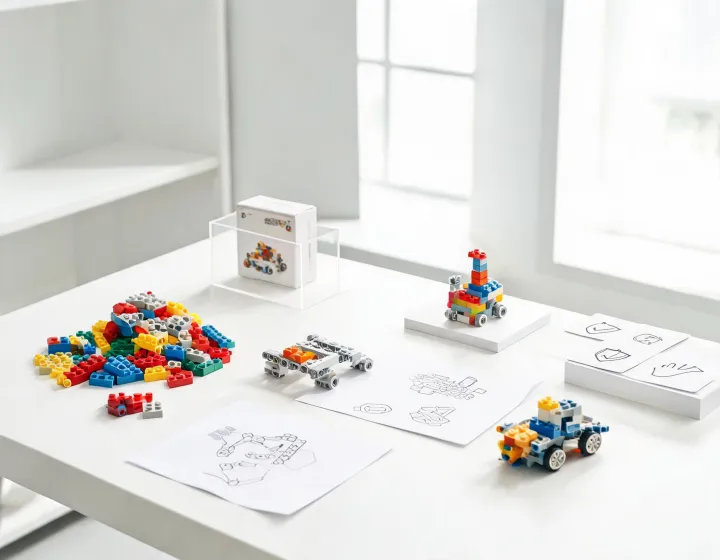
We keep the brand story factual because parents, educators, and retail buyers all need the same thing: a reason to trust the toy before a child invests attention in it.
Every program starts with a play architecture that defines the age range, build difficulty, story role, and repeat-play mechanic. This prevents a set from being chosen only because it looks exciting on a box.
Pieces, wheels, figure accessories, and packaging are reviewed for age grading, repeated handling, storage, and the parent-facing safety language needed for clear purchase decisions.
We use motion, balance, sequencing, and visible cause-and-effect as friendly STEM entry points. Children do not need a lesson plan before they start testing ideas with their hands.
Product naming, shelf grouping, and comparison copy are written so buyers can explain the difference between a collectible build, a construction challenge, and an RC activity in one scan.
Each product family gets a visible age band, support note, and small-part review so families can choose without reading a long technical page.
Instruction steps are reviewed for confidence-building moments. A child should see progress before frustration takes over, especially in longer construction sets.
RC and electric toys include plain-language motion boundaries, charging or battery notes, and supervised-use cues that match the intended age stage.
Finished models should have a place to live, and loose pieces should return to a system that makes the next build easier rather than messy.
We will turn it into a practical Lego play system with product logic, safety language, and a launch path that a buyer can understand without a second meeting.
Talk to Lego